
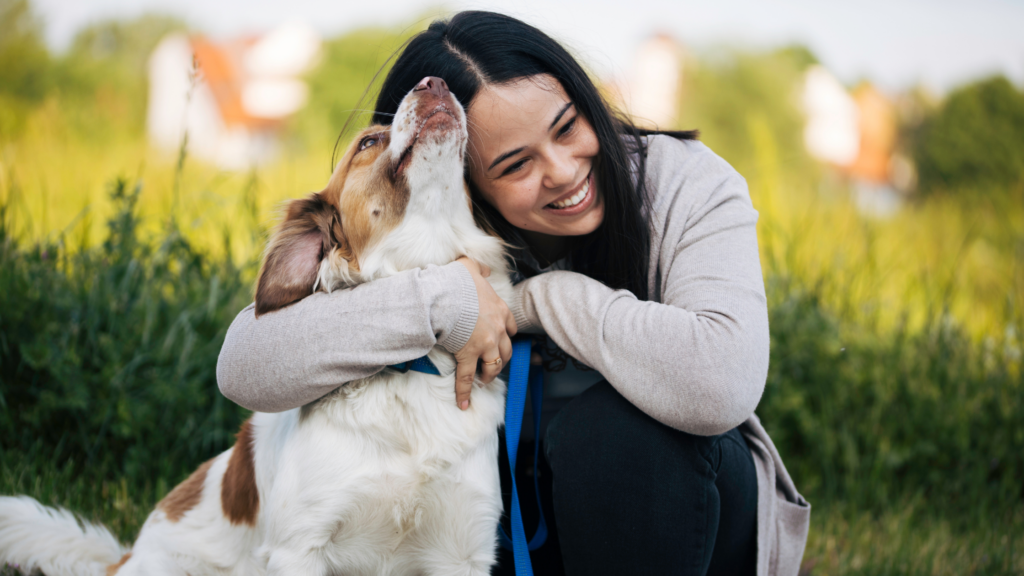
Love, from an animal’s perspective, isn’t abstract or symbolic, and it isn’t tied to special occasions or grand gestures. Animals don’t experience love as an idea. They experience it as the quality of the relationship itself.
In my work, and in countless conversations with pet guardians, one truth surfaces again and again: regulation, safety, and connection are rooted in relationship. That matters when we talk about love, because animals don’t measure it by our intentions or what we believe we’re expressing. They experience love through how the relationship feels.
Animals live in the present moment. Their nervous systems are constantly reading the environment for cues of safety, consistency, and attunement. For them, love doesn’t need to be named or explained. It’s something that’s felt through presence, reliability, and emotional coherence.
Love is Consistency, Not Intensity
Humans often equate love with intensity: strong emotions, big gestures, deep attachment. Animals experience love through reliability.
Who shows up every day?
Who respects rhythms and routines?
Who notices when something is off?
This is why disruptions like changes in schedule, travel, holidays, and emotional overwhelm can affect animals so deeply. When routines blur and energy shifts, animals feel the loss of predictability in the relationship. Not because they doubt love, but because love, to them, is part of what creates stability.
During times of transition or disruption, many people notice their animals behaving differently. Eating patterns change. Anxiety surfaces. Restlessness increases. These aren’t signs of misbehavior. They’re signals that the relational container has shifted. Animals don’t respond to events themselves. They respond to changes in regulation, consistency, and how present we are with them.
Love Is Felt Through the Nervous System
Animals don’t interpret words the way humans do. They read tone, breath, posture, and emotional coherence. Your animal knows when you’re distracted, even if you’re physically close. They know when your body is tense while your voice is cheerful. They know when you’re present without needing anything from them. From an animal communication perspective, love is transmitted through nervous system alignment. When your body is grounded, your breathing slows, and your attention softens, your animal feels safe. That safety is love. This is why simply sitting with your animal, without fixing, training, or engaging, can be one of the most loving things you do. You are offering regulation through presence.
Love as Responsibility and Care
One of the clearest expressions of love I witness is not joy, it’s grief. When an animal passes, especially after illness or long-term care, guardians often question whether they did enough. But animals experience love through being advocated for, not through perfect outcomes. Love looks like showing up for appointments, adjusting routines, and paying attention. Also, it’s making difficult decisions with care and humility. Animals don’t measure love by longevity or comfort alone. They experience love through being taken seriously as sentient beings whose experience matters.
When someone has gone above and beyond to provide quality of life, companionship, play, and presence, animals are aware of that devotion. They don’t judge limitations. They recognize effort, sincerity, and care. Grief, in these cases, is not evidence of failure. It’s evidence of a relationship that mattered.
Love Is Not Perfection
Animals don’t need us to be calm all the time. They don’t need us to get it right every day. What they need is emotional honesty. Trying to perform love (think being endlessly upbeat, patient, or composed) can actually create distance. Animals respond more deeply when we are genuine. A regulated nervous system doesn’t mean a silent one. It means one that can move, respond, and return. When we allow ourselves to be human, which may look like being tired, grieving, joyful, or uncertain, all while staying connected, animals feel included in our lives rather than managed around them.
How to Let Your Animal Feel Your Love More Clearly
You don’t need to do more; you need to slow down. When you sit with your animal without an agenda, allow your breathing to settle, and notice their body language without immediately interpreting or responding, you create space for genuine connection. Simply sharing space without expectation or effort speaks directly to how animals experience love: as safety, consistency, and connection. Love, to an animal, isn’t something you prove through actions or reassurance. It’s something you practice quietly, repeatedly, and honestly through the relationship you build together every day.