After exploring how animals experience love, a natural question often follows, sometimes softly, sometimes with uncertainty: How do I know when my animal loves me? Humans are taught to look for reassurance through words and obvious gestures. Animals don’t express love that way. They don’t perform affection for confirmation. When an animal loves you, it shows up through the way the relationship functions through choice, trust, regulation, and presence. Understanding how animals express love means learning to recognize connection in forms that may look quieter than we expect, but are no less meaningful.
When an Animal Loves You, It Shows Up as Choice
One of the clearest signs that an animal loves you is choice. Animals do not stay near humans out of obligation. When they choose proximity, especially when there is no task, no food, and no request being made, that choice carries weight.
A dog who follows you through the house, settles near you during calm moments, or checks in visually throughout the day is choosing relationship. A cat who sits nearby rather than on you, sleeps where they can see you, or moves from room to room with you is also choosing connection, even if it’s less demonstrative. A horse that walks toward you in the pasture, mirrors your movement, or remains engaged without being haltered is expressing preference and connection in a way that is entirely voluntary. Love, from an animal’s perspective, often shows up first in where they choose to place themselves.
When an Animal Loves You, It Shows Up as Regulation
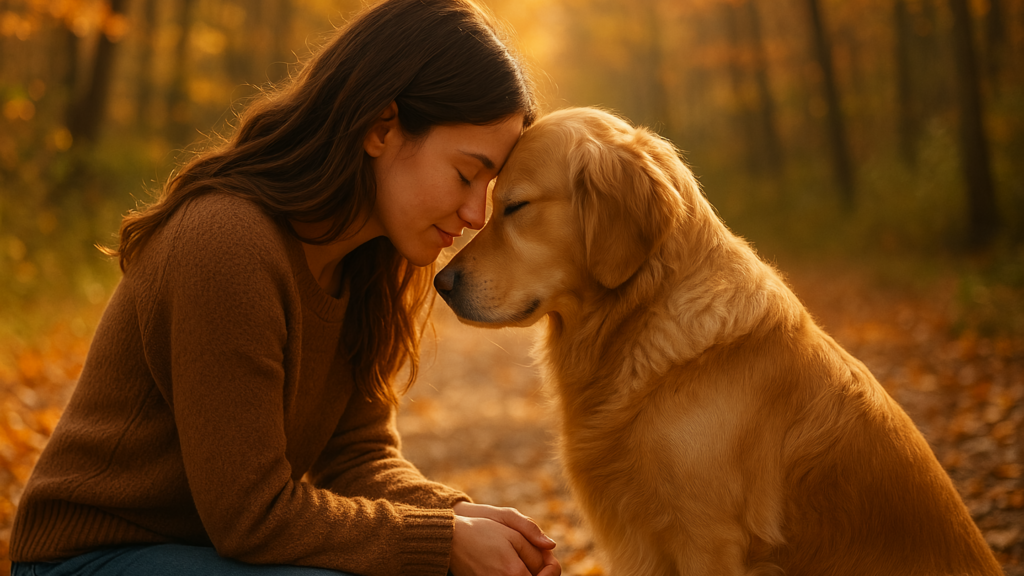
Animals who love you often help regulate the relationship. You may notice your dog relaxing when you exhale, lying close when you’re overwhelmed, or becoming calmer simply by being near you. Cats often regulate more subtly, staying present during emotional shifts, positioning themselves nearby, or appearing once energy settles. Horses, in particular, are deeply attuned to nervous system states. A horse that softens their body, lowers their head, sighs, or matches your breathing is responding directly to your internal state.
This kind of attunement isn’t accidental. Animals are constantly reading nervous systems. When they adjust themselves in response to you, they are participating in the emotional field of the relationship. That participation is one of the ways animals experience and express love.
When an Animal Loves You, Trust Becomes Visible
Trust is one of the deepest expressions of love an animal can offer. A dog who exposes their belly, sleeps deeply in your presence, or allows care during discomfort is showing trust. A cat who sleeps near you, turns their back to you, or remains relaxed rather than hyper-vigilant is demonstrating safety in the relationship. A horse that allows you into their space, stands quietly with you, or remains emotionally available instead of guarded is offering trust built over time. Animals do not give trust lightly. When an animal loves you, they feel safe enough to be vulnerable without constant vigilance.
When an Animal Loves You, It May Not Look Like Affection
One of the most common misunderstandings about love is expecting it to look the same across species—or even individuals. Not all animals express love through cuddling, licking, or constant physical closeness. Some express love through parallel presence, shared space, or quiet companionship.
Cats are often misunderstood here. A cat who leaves when overstimulated but returns later is regulating the relationship, not withdrawing from it. Horses may step away to process and then re-engage, which is part of how they stay connected without overwhelm. Dogs, while often more outwardly expressive, may also show love through calm companionship rather than constant interaction. Love looks different depending on the species, temperament, and lived experience of the animal.
When an Animal Loves You, Honesty Is Part of the Relationship
Animals who love you will be honest with you. They will communicate discomfort rather than shut down entirely. They will express boundaries instead of complying out of fear. They will show you who they truly are rather than who they think you want them to be. This honesty is not defiance, but trust. An animal that feels safe in relationship doesn’t need to perform or appease. Love allows for truth.
Learning to See Love Through an Animal’s Eyes
If you ever find yourself questioning whether your animal loves you, it often reflects human doubt rather than animal absence. Animals don’t question love the way humans do. They don’t keep score or replay moments of insecurity. They live inside the relationship as it exists now.
The more you learn to observe choice, regulation, trust, and presence, rather than looking for human-style affection, the clearer love becomes. When you stop asking whether your animal loves you the way you expect and start noticing how they express connection in their own way, the answer is often unmistakable.
Love, to an animal, isn’t declared. It’s lived through consistency, honesty, and shared presence. And once you learn how to see it, you realize it’s been there all along.