For years, telepathy has been dismissed as something “woo-woo” or supernatural. But new research is changing that. Studies with nonverbal individuals, especially people with autism, are showing what many animal communicators have always known: telepathy is a natural, scientifically documented form of communication. And the implications for how we connect with our pets are profound.
Telepathy in Nonverbal People
Psychiatrist and neuroscientist Dr. Diane Powell has studied nonverbal autistic children and found compelling evidence that they can communicate telepathically. In controlled experiments, children who could not speak were able to identify words, numbers, and images known only to others in the room. These results suggest that communication can take place mind-to-mind, without spoken words or gestures.
Parents often describe the same phenomenon in everyday life: knowing instantly when their child needs help, or “hearing” an unspoken request in their minds. These experiences are no longer brushed aside as coincidences. Science is beginning to validate what families have felt for years — that thoughts, images, and emotions can be shared directly.
The Link to Animal Communication
If nonverbal people can use telepathy, it’s not a stretch to understand how animals do the same and how animal communicators can communicate with them. After all, animals don’t use spoken language. They rely on energy, body signals, and intuitive connection. Telepathy is simply another channel they use to share what they feel and need.
What Is Animal Telepathy?
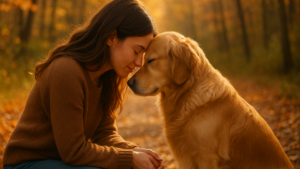
Animal telepathy is the direct exchange of images, feelings, or sensations between people and animals. Unlike training cues or body language, telepathy requires no visible signals. It’s a natural, silent language that bypasses words entirely.
While once thought of as “woo-woo,” this form of communication is being validated through both research and real-world studies.
Scientific Research Supporting Animal Telepathy
Dogs and Anticipation
Controlled studies have documented that dogs often wait by windows or doors long before their owners arrive home — even when the return time is shifted to rule out routine or external cues. In Rupert Sheldrake’s experiments, these anticipatory behaviors were observed too frequently to dismiss as coincidence.
Horses and Physiological Connection
Equine research has found that horses and riders can synchronize heart rates during shared activity, particularly in stressful situations. This synchronization suggests a channel of direct awareness, with riders frequently reporting that their horses respond to subtle emotional states or unspoken intentions (Gehrke, Baldwin, & Schiltz, 2011).
Cats and Silent Awareness
Though less studied in formal laboratory settings, countless cat owners describe strikingly consistent behaviors: cats hide well before a trip to the veterinarian, or appear suddenly when their owner simply thinks about feeding them. Such anecdotes, collected in Sheldrake’s survey research on animal telepathy, highlight a pattern of felines responding to their humans’ thoughts rather than observable cues.
A Universal Language Without Words
Across species, the evidence points in the same direction: animals are perceiving more than spoken words or visible signals. Whether it’s a dog anticipating an arrival, a horse mirroring a rider’s inner state, or a cat vanishing before the carrier comes out, these behaviors suggest a silent yet natural form of communication that science is beginning to explore.
Why Animal Telepathy Matters
Research shows us that telepathy is not paranormal; it’s natural. Recognizing this truth changes how we relate to our pets:
- Early health detection: Animals may signal discomfort or illness telepathically before symptoms are obvious.
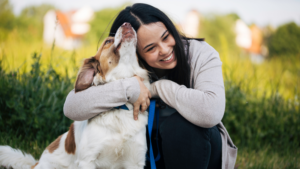
- Emotional support: Pets often mirror their humans’ emotional state, sensing stress, sadness, or joy without a word being spoken.
- Training and performance: Riders, trainers, and handlers who learn to pair telepathic connection with traditional training often see greater trust and cooperation.
- Deeper bonds: Listening to what your animal “says” beyond words builds a stronger, more compassionate partnership.
How You Can Tune In
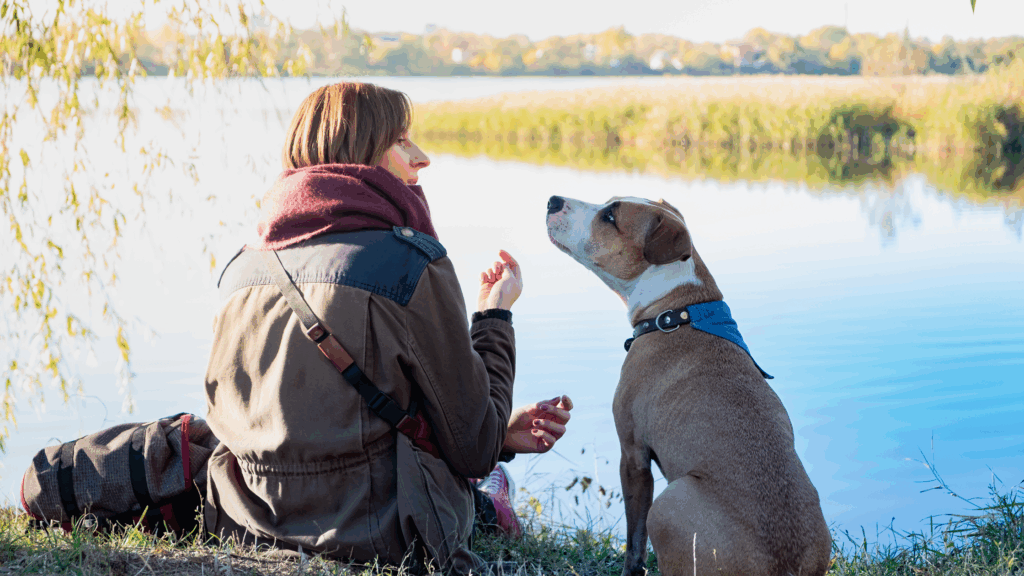
You don’t have to be a professional communicator to start noticing telepathic exchanges with your pets. Try these simple steps:
- Quiet the noise. Take a few deep breaths and focus your attention on your animal.
Ask, then listen. Form a clear question in your mind, then notice any image, feeling, or sensation that arises. - Trust your impressions. The first thought is often the correct one — before your logical brain talks you out of it.
- Validate with action. If you sense your dog wants water or your horse is uncomfortable, respond and watch how they react.
A Natural Language Between Species
Science is catching up to what animal lovers have always known: our pets communicate in ways that transcend speech. From controlled studies on dogs to research in equine physiology, the evidence is mounting that telepathy is part of the bond between humans and animals.
It’s not magic. It’s not supernatural. It’s simply another way of connecting — one that strengthens our relationships, improves care, and honors the silent wisdom of the animals we love.